

1. Stargazing at The NamibRand Nature Reserve – Namibia
The NamibRand Nature Reserve in Namibia was the first reserve to achieve Gold Tier dark-sky status from the International Dark-Sky Association, which means its sky quality is ideal for stargazing. Designated a Gold Tier International Dark Sky Reserve by the International Dark Sky Association, the NamibRand International Dark Sky Reserve was only the second place on Earth that was designated with Gold Tier status because of its exceptionally dark skies. As a part of the classification of this area as a night sky reserve the Namib Desert Environmental Educational Trust Centre was formed to offer educational programs on the earth and the sky. These programs are open to all Namibians; schoolchildren are their most common guests, but also to visitors from all over the world. The program offers overnight accommodation and guests have the option of staying in open-air units where they can view the terrific night sky from their beds.
In addition, to dazzling night skies, the reserve was established to help protect and conserve the unique ecology and wildlife of the southwest Namib Desert. Conserving the pro-Namib, the area along the eastern edge of the Namib Desert, is critically important in order to facilitate seasonal migratory wildlife routes and to protect biodiversity. It is probably the largest private nature reserve in southern Africa, extending over an area of more than 200,000 ha. The Reserve shares a 100km border with the Namib-Naukluft National Park in the west and is bordered in the east by the imposing Nubib Mountains. Virtually all facets of the Namib Desert are represented on the Reserve – sand and gravel plains and stretches of savanna alternate with mountain ranges, inselbergs, and vegetated dune belts.
2. The magnificent Ngorongoro crater – Tanzania
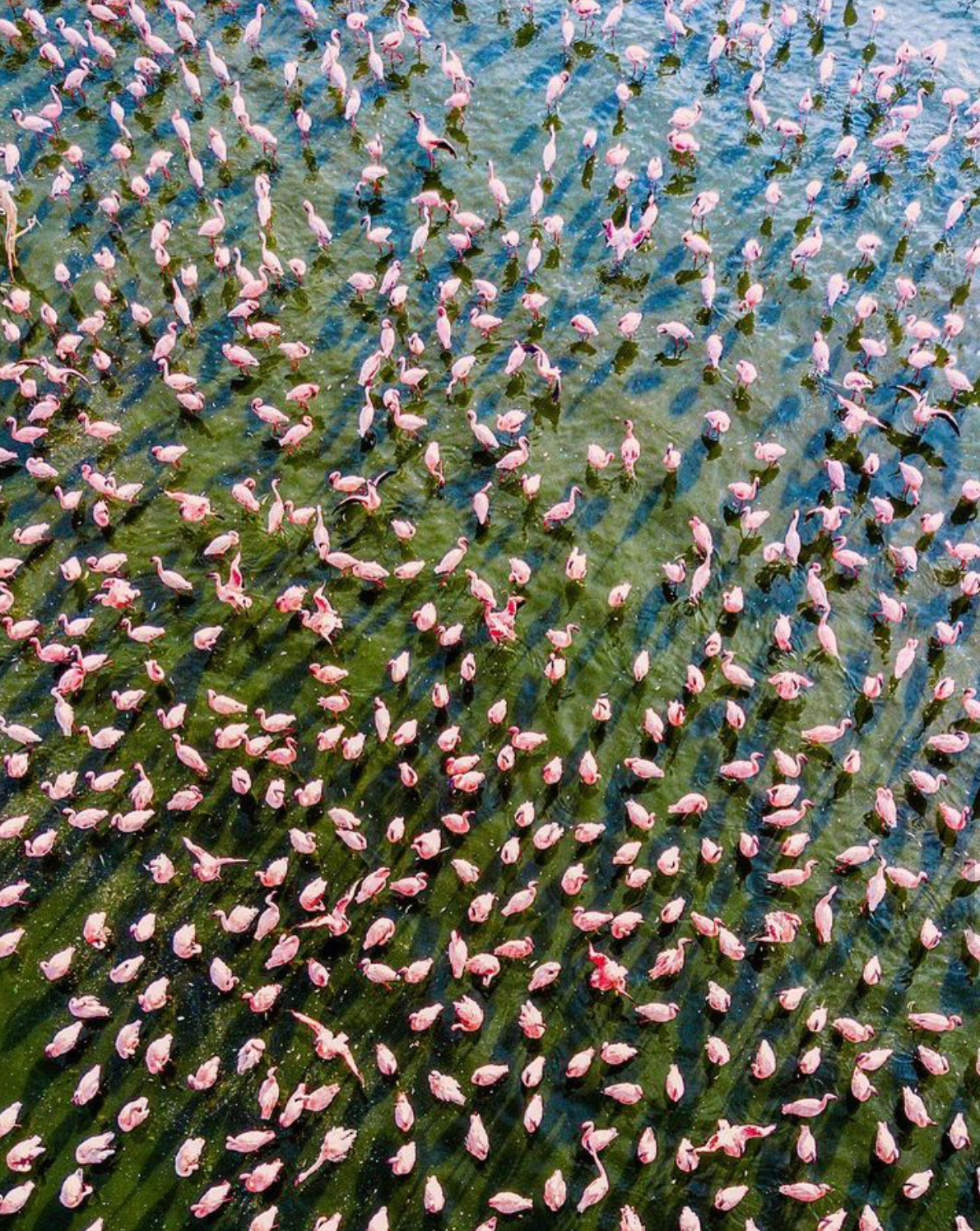
The magnificent Ngorongoro crater lies 180 kilometers (approximately 112 miles) west of Arusha in the northern part of Tanzania. Once a massive volcano around 2.5 million years ago collapsed in on itself. A caldera formed by the implosion of a volcanic cone after the magma underneath it emptied in an explosion that left a gigantic vacuum under the cone. The result creates a caldera, a true lost world. Inside the crater, you will find an entire ecosystem within the ecosystem. In Stephen Cushman’s, “Why Didn’t Hemingway Mention This Crater?” According to the World Conservation Monitoring Center of the United Nations Environment Programme, the crater measures 17.7 kilometers by 21 kilometers roughly 11 by 13 miles making it the largest unbroken, inactive unflooded caldera in the world. According to observers, before it erupted, it would have been higher than Mt Kilimanjaro, the highest peak in Africa. Safety precautions with warning signs, “never wander around in your lodge near the crater during the night,” are important to ensure safety and prevent any encounters with the animals. Nearly three million years old, the ancient caldera shelters one of the most beautiful wildlife havens on earth. There are well over 7,000 wildebeests in Ngorongoro Crater, 6,000 spotted Hyenas, 4000 zebras, over 3000 gazelles, over 300 elephants, more than 3,000 Elands, over 55 Lions, about 30 Black Rhinos, among so many others. The Ngorongoro Crater animals are recorded to be more than 25,000 in total. The crater is also a true bird paradise. Home to pink flamingos due to the fresh and alkaline water on the crater’s lake as well as births such as cape teal, black-bellied bustard, augur buzzard, sacred ibis, abdim’s stork, white pelican, cattle egret, kori bustard, crested lark, fantail widowbird, crown crane (the national emblem of Uganda), blacksmith plover, rosy-breasted longclaw. Eden could not have been more copious, argued Stephen Cushman, “Why Didn’t Hemingway Mention This Crater?”
3. Benin City National Museum – Nigeria

The Benin City National Museum in Benin City, Nigeria is home to one of Africa’s greatest civilizations and kingdoms. Between 1800 and 1500 B.C., small communities of craftspeople gathered to stoke furnaces, intending to fire ceramic but in the lateritic African soil, the craftsmen discovered a by-product – iron. Iron was first used for decoration and ornamentation but very quickly people began to see its diverse usage and shape it. Iron began to be used as currency and also in agricultural production. Iron was thought to be discovered in Turkey around 1500 B.C., however, evidence now shows that iron emerged at the same time in Africa. There has been a long-standing view that iron could be smelted in sub-Saharan Africa was completely dismissed. But new evidence now shows ironworking began in the heart of Africa. Dating around 1000 in the lake Chad area and 900 in the middle of Nigeria. 700 to 500 B.C. in Mali.
Although little tangible evidence was left about ironworking in Africa however, they did leave their technological legacy, together with the sophisticated artistic heritage unique to Africa. At the center of modern-day Nigeria during the first millennium B.C., a remarkable artistic tradition of terracotta sculpture emerged. Pieces that are highly sophisticated, intricately detailed, and technologically advanced. Yet much of the culture from which they were created remains a mystery. Famously known as the Nok Terracottas and they are sublime. In 1943, a farmer from a village called Nok gave archeologist Bernard Gagg the head of the scarecrow. When Fagg inspected the piece, he estimated the finely sculpted head dated back to around 900 B.C., making it outside of Egypt the earliest sculptural art found in Africa. Some argued they could be depicting high-ranking people in customary attire, and some believe they are made by traveling artists creating these works for high-ranking individuals there are also predictions they could be depicting distinctive religious traditions.
The historical kingdom of Benin was established in the forested region of West Africa in the 1200s C.E. According to history, the Edo people of southern Nigeria founded Benin. They no longer wanted to be ruled by their kings, known as the ogisos. They asked a prince from Ife, an important West African kingdom, to take control. The first oba, or king, in Benin, was Eweka. He was the son of the prince from Ife. The kingdom reached its greatest power and size under Oba Ewuare the Great. He expanded the kingdom and improved the capital, present-day Benin City; the city was defined by massive walls. The height of power for Benin’s monarchs began during this period. To honor the powerful obas, the people of Benin participated in many rituals that expressed their devotion and loyalty, including human sacrifices.
Located in the city center on King’s Square, The Benin City National Museum is now home to the most significant number of artifacts related to the Benin Empire the Museum is also now the richest in the world with respect to the number of artifacts and history it holds not just of the Benin Empire but of surrounding ancient city-states as well. The artifacts, one of Africa’s most significant heritage objects were stolen by the British troops in 1897, one of the most offensive British offenses. The Bronz’s were then auctioned off and spread among institutions in Europe, from Germany, New Zealand, and the United States, with the biggest collection at the London Museum, England. On July 1st. 2022, a memorandum of understanding was signed between Germany’s Foreign Minister Annalena Baerbock, Minister of State for Culture, Claudia Roth, and Nigeria’s Lai Mohammed, and Zubairu Doda on the transfer of ownership of the Benin Bronzes from Germany to Nigeria. In August 2022 the London Museum also decided to return more than seventy pieces of the looted artifacts. Also, in October 2022, the Smithsonian Museum transferred twenty-nine pieces of the artifacts as well. And in December 2022, Germany returned the twenty-two looted artifacts to rest at peace in their rightful home at The Benin City National Museum, Nigeria.
Addressing the Humboldt Forum on September 22nd., 2021, in Berlin Germany, the author Chimamanda Ngozi Adichie tasks European nations to confront their role in the history of colonial violence and return the artworks and objects of spiritual significance stolen from various parts of the continents of Africa, Asia, and Latin America. Adichie argued, “all countries have parts of their history that they are not proud of and a nation that believes in the rule of law cannot possibly be debating whether to return stolen goods. It just returns them.” I believe many museums got the message but there is still more to be done.
4. Cruise along the Nile in a Felucca to Witness the Glorious Aswan Sunset – Egypt
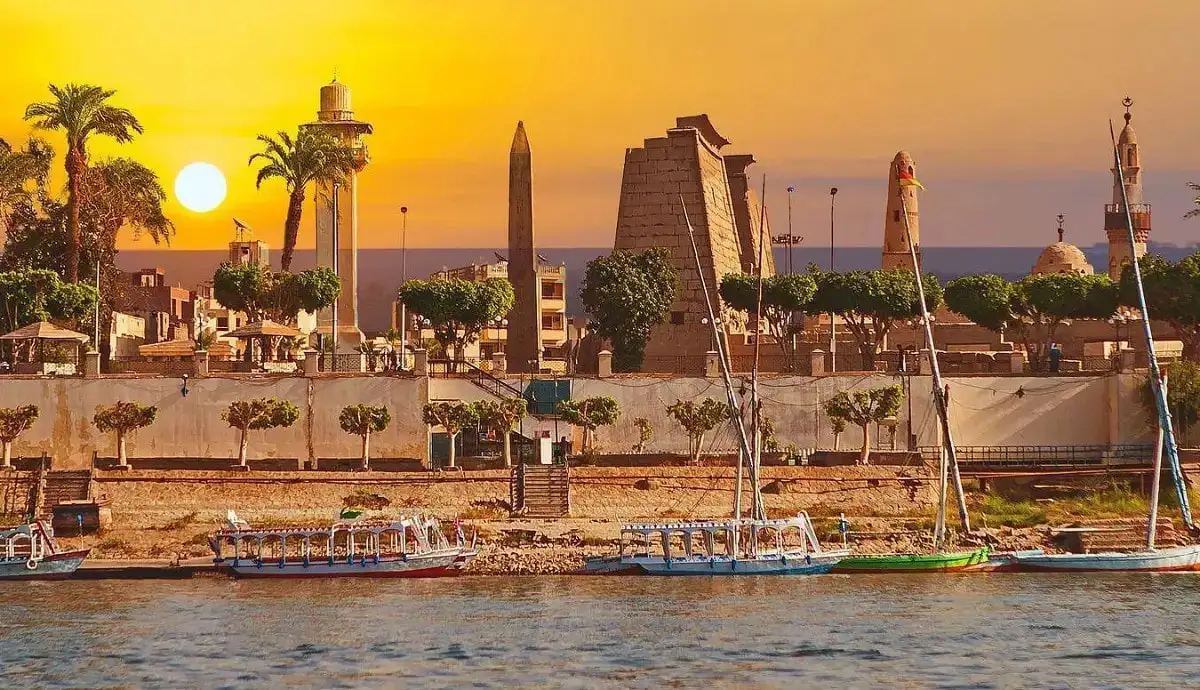
Although not a specific piece of architecture, watching the sun set over Aswan is a truly magical sight. Travel like an Egyptian by peacefully cruising along the Nile in a felucca – a traditional sailing boat. Lie back and watch Egypt’s iconic scenery, as you anticipate the setting of the sun. When the time is right, gaze ahead to watch the magnificent sunset cast a mesmerizing soft warm glow over the surrounding area. Witnessing this magical sunset across Aswan is heavenly like the sun is waving goodbye in the most sublime manner which makes any form of activity like a boat ride truly majestic or a super safari across the desert on the back of a camel or quad to the Nubian villages or watches the sun kissing the Abu Simbel temple a farewell until the next morning. It is certainly the quintessential Egyptian experience and a travel memory you won’t easily forget.
5. Hike to the top of Table Mountain, Cape Town’s iconic landmark and the world’s seventh wonder of nature – South Africa
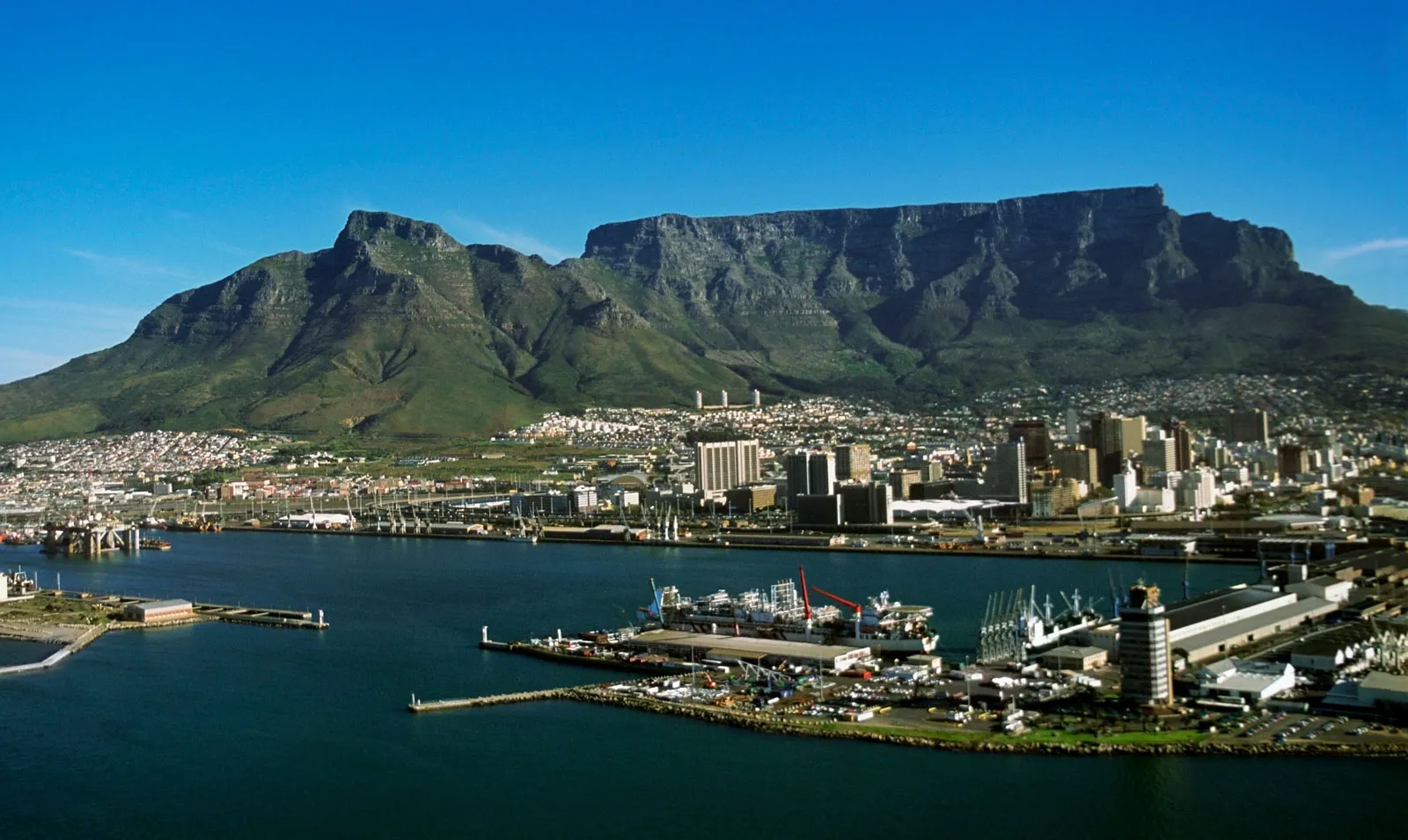
Table Mountain is a flat-topped mountain forming a prominent landmark overlooking the city of Cape Town in South Africa. It is a significant tourist attraction, with many visitors using the cableway or hiking to the top. Whether it is covered in a blanket of moody clouds or showing off against a crisp cloudless blue sky, Table Mountain is always spectacular. Cape Town locals are pretty fond of the mountain that looms over their city… and with good reason! Table Mountain, which is home to the richest, yet smallest floral kingdom on earth, was voted one of the New Seven Wonders of the World in 2011.
Flanked by Devil’s Peak and Lion’s Head, Table Mountain makes up the northern end of the Cape Fold Mountain range. It’s hard to imagine, but the mountain’s distinctive flat top – a three-kilometer level plateau – was once the bottom of a valley! The mountain was given its name — Taboa do Cabo (Table of the Cape) — by Antonio de Saldahna after he climbed up Platteklip Gorge in 1503. Legend has it that the tablecloth of clouds that pours over the mountain when the southeaster blows is the result of a smoking contest between the devil and a retired sea captain called Jan van Hunks. Get hold of a City Pass for generous discounts on Cape Town’s top attractions.
Hiking safety tips
- Never hike alone. Always tell someone where you’ll be and how long you expect to take.
- Make sure you have plenty of water, snacks, sunscreen, waterproof clothing, and a mobile phone in case of emergencies.
- Wear appropriate shoes.
- Pick a route best suited to your fitness level and experience. Preferably hike with someone who is familiar with the route.
- Don’t take shortcuts or stray off the path.
- If visibility is poor, don’t continue climbing. Find a spot that offers some sort of shelter.
6. Take a hot air balloon ride over Lake Nakuru – Kenya
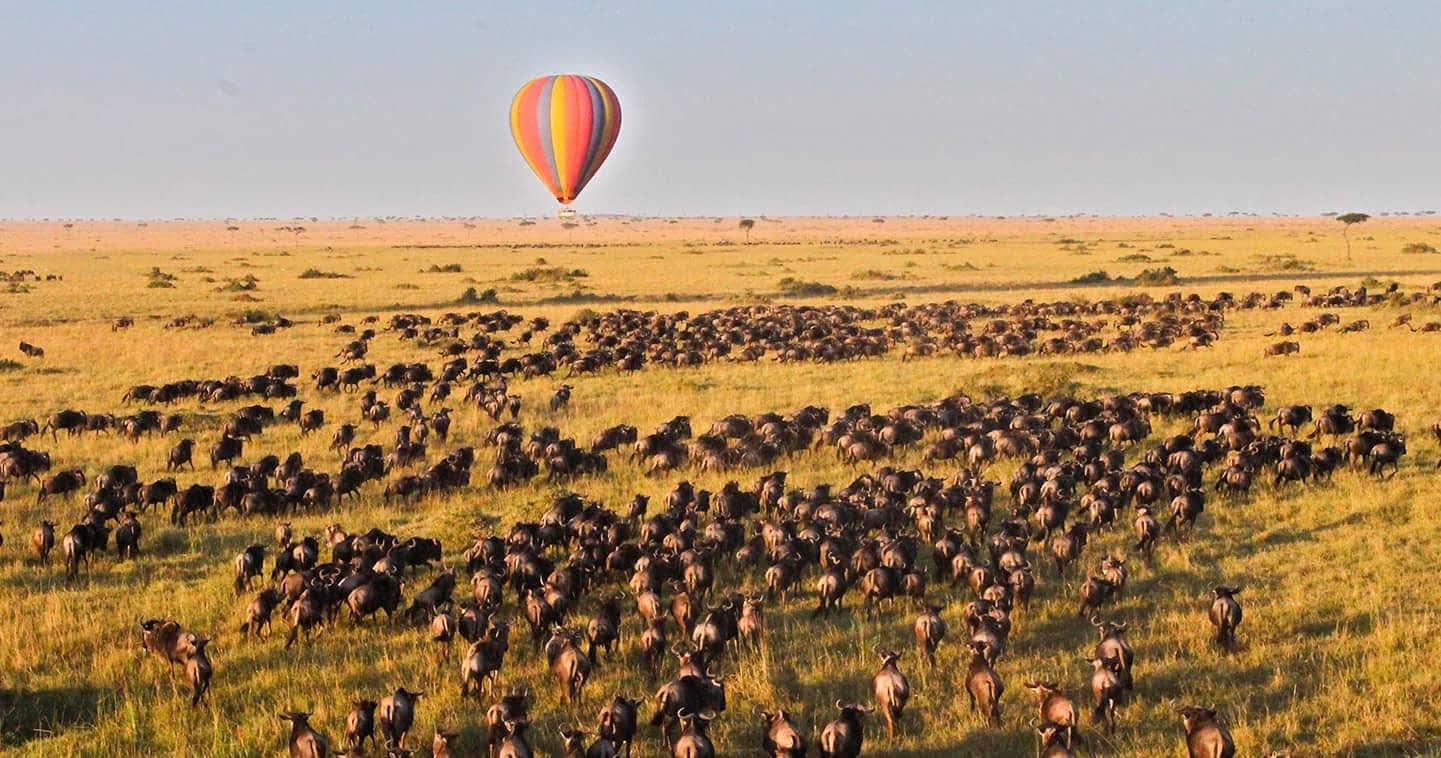
On the floor of the Great Rift Valley, surrounded by wooded and bushy grassland, lies the beautiful Lake Nakuru National Park. Visitors can enjoy the wide ecological diversity and varied habitats that range from Lake Nakuru itself to the surrounding escarpment and picturesque ridges. Lake Nakuru National Park is ideal for bird watching, a sanctuary to over four hundred different species of bird, and great for hiking, picnic, and game drives. While you should definitely have a go at classic birdwatching from the ground, you can rise up in the air by taking a hot air balloon ride over the savannah. Stay at The Cliff, a brand new luxury camp in the park, and take flight in their signature green and yellow balloon for the ultimate bird’s eye view of Lake Nakuru.
7. Experience Nomadic Life in total solitude in the Moroccan desert – Morocco
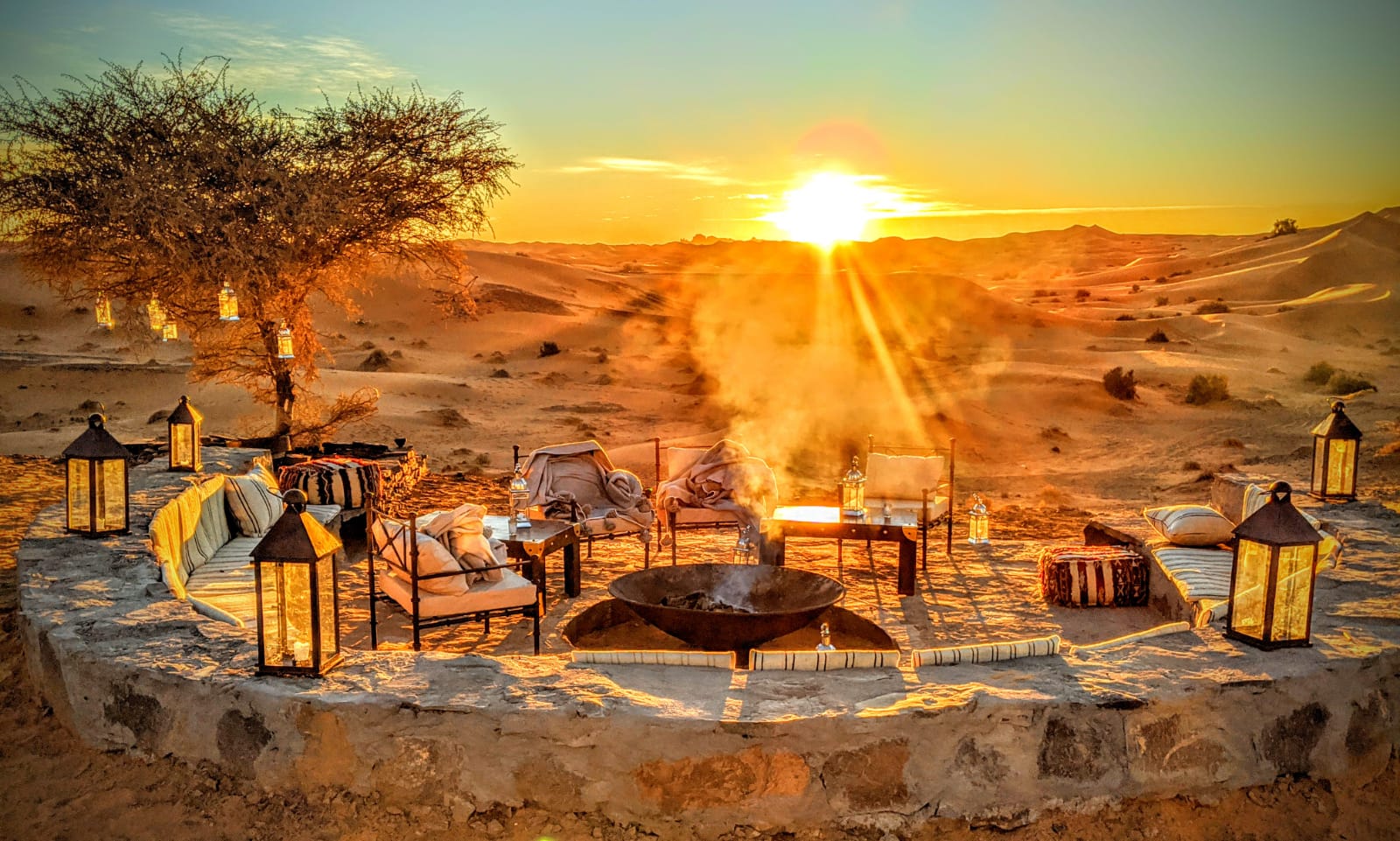
With its eye candy deserts filled with glowing sand dunes, Morocco lives up to its famous name, “Land of dunes.” The south of Morocco is the gate that leads to the Sahara desert. In the middle of these stretches of sand, discover a world of dunes, sunshine, and tranquility. Venture out there and experience the lifestyle of the nomadic tribes of the Sahara.
Marrakech and Agadir both lead to Sahara, and so is Fez. From the imperial city, cross the Talghemt pass. On the way to the desert, the land is covered with oases: it is the Tafilalet, a transitional region where the greens of the vegetation almost melt with the ochre of the sands. Following the trail of the old caravans, you reach Rissani, the cradle of the ancient Alaouite dynasty. You’ve just arrived in the desert: dunes with their soft curves shaped by the Saharan wind “The Chergui”.
Begin your glamping adventures at Merzouga Luxury Desert Camp. Located strategically in the middle of the big dunes of the Erg Chebi Desert, Merzouga luxury desert camps offers a spectacular nomadic experience. It is especially unique because of the ‘KHaimas’, which are traditional tents made of camel skin typically used by nomadic people. One of the most bucket-list-worthy experiences you could have in Africa is sleeping in the desert in Morocco. Take a sunset camel ride, then have a true Moroccan gastronomic experience back at the remote tented camp. Spending the night surrounded by nothing but sand dunes (and a few braying camels) for miles.
8. Ancient Civilizations of the Nile – Memphis and the Pyramids – Egypt

The Egyptian pyramids hardly need an introduction – they are the only surviving member of the ancient Seven Wonders of the World, and the most widely-recognized monuments in Africa. The antiquity of these massive structures – the tombs of pharaohs – is simply mind-boggling: the first of the great pyramids – the world’s earliest stone monument – was built at Saqqara in 2650 BC – more than 4,650 years ago! Nearby the ancient capital Memphis was built around 3,100 BC, symbolically located at the spot where the Nile Delta meets the river valley, thus serving as a bridge, unifying the lands of Upper and Lower Egypt. Today, it is a tiny village 24 km south of Cairo, and about 3 km from the most ancient of the pyramids at Saqqara.
Four groups of pyramids are included in the world heritage property spread out in the desert along the west bank of the Nile over a total distance of about 30 km. Each group is different, relating to a specific period and including a unique assemblage of temples, tombs, mastabas, and other monuments. The pyramids of Giza, with the distinctive Sphinx, are at the northern end of the field disturbingly close to Cairo, and at risk of being engulfed by the great modern metropolis. Further south, there are further complexes at Abu Sir, Saqqara, and Dahshur, with a total of about 35 pyramids between them.
9. Take a cooking class using one of the largest spice collections in the world – Zanzibar
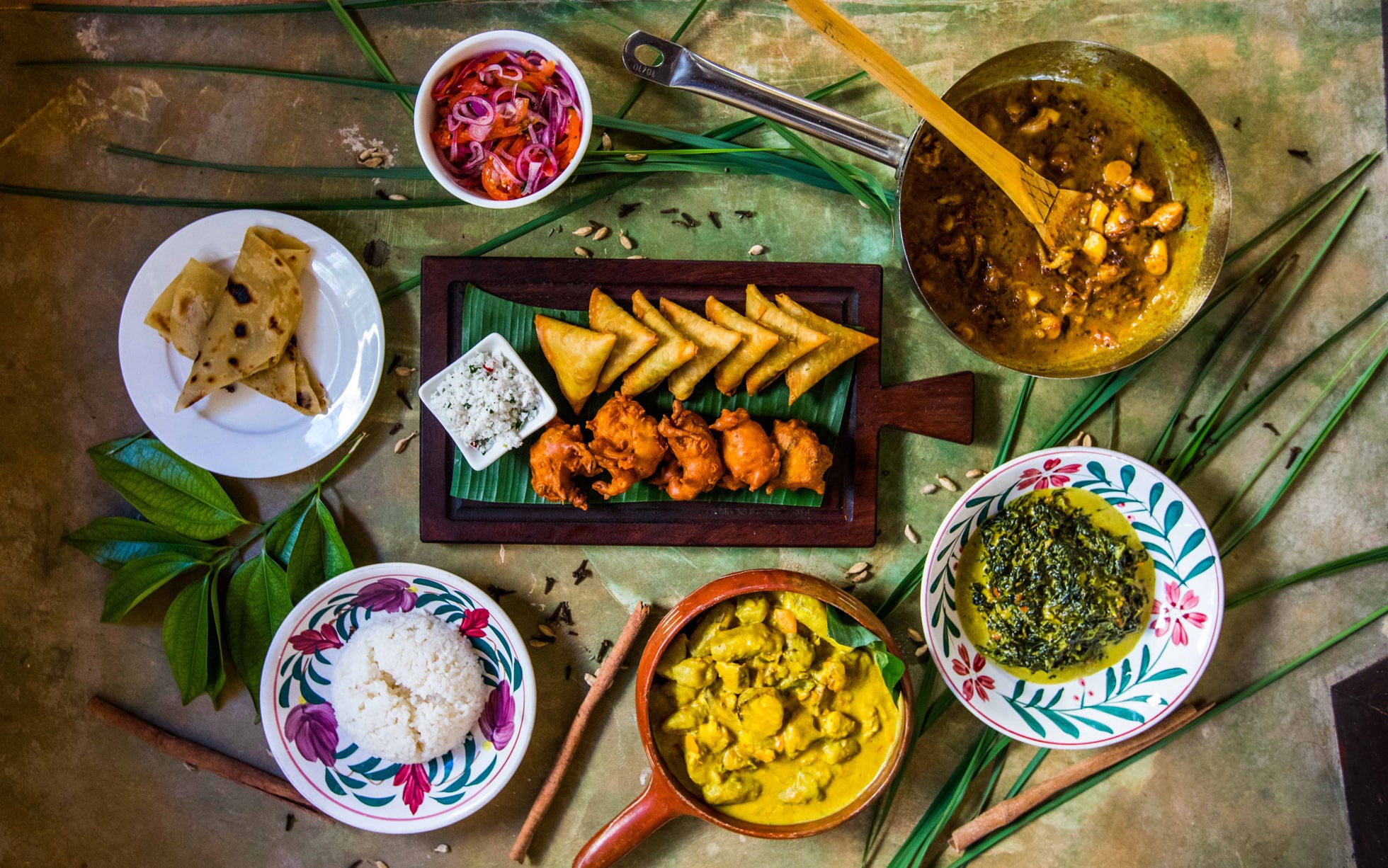
Zanzibar is a confluence of world cultures—Arab, Indian, and European influences that have made their imprint on the semi-autonomous island. Zanzibar is known for using many different spices in its cuisine — it’s often called “Spice Island” — and the Essque Zalu Zanzibar is one of the best places to get to know them. Begin your day by taking a tour of the Kijichi spice farm in town, where you can smell and taste different spices and tropical fruits. Then, cook your own dinner at the resort’s Mosha Cookery Studio, where you’ll learn about the local cuisine’s Swahili, Persian, Portuguese, Arab, and Indian influences. The hotel is striving to beat the world record for the world’s largest collection of spices. Even though they’re not quite there yet, the fragrant collection is still pretty darn impressive.
Zanzibar is also well known for its street food. “Say you’re going to Zanzibar and people will tell you about the seafood. It’s pretty impressive. In Stone Town’s Forodhani Gardens, every night vendors set up an insane variety of every iteration of seafood snack,” Anthony Bourdain, Parts Unknown.
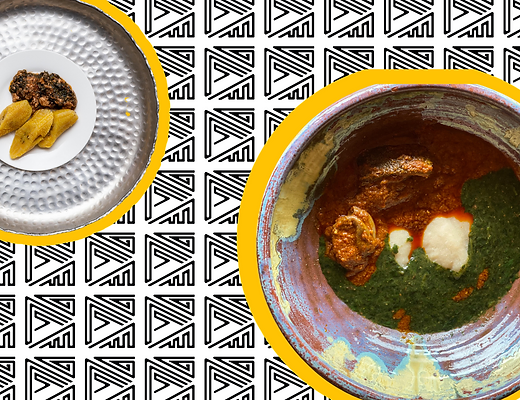
Accra’s food scene typically consists of two schools: “chop bars” that serve traditional, cheap meals like fufu (made from pounded cassava, green plantains, or yams) with tomato-based spicy soup, and pricier restaurants serving foreign fare. Travelers to Accra, Ghana’s capital, can now see a new wave of chefs and entrepreneurs bridging this gap by emphasizing and innovating with local produce. At the Mix, a new restaurant and design hub, the West African staple gari (granulated cassava root) is dyed pink with beetroot and accompanies squid in a passion fruit sauce.
According to Jessica Sarkodi the sustainable food space in Accra is also one to watch; Ghana Food Movement, an educational group, hosts events throughout the year, including a signature Dine & Dance series in which underutilized indigenous ingredients like millet, eaten by Ghanaians almost exclusively as porridge, are made into stars over three courses. The meal is followed by a dance party, of course, in true Ghanaian fashion.
11. Experience the Magic of the Salt Pan Etosha National Park – Namibia
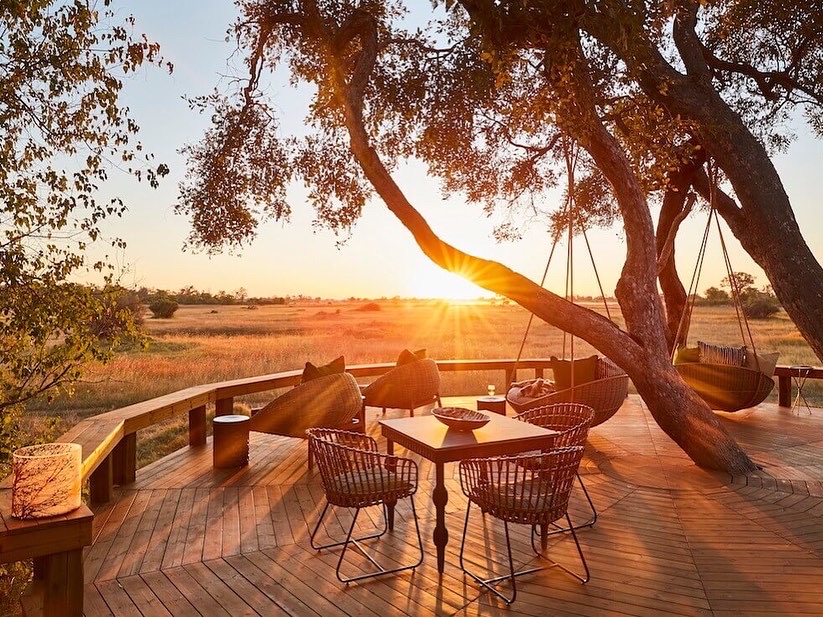
Etosha National Park is unique in Africa. The park’s main characteristic is a salt pan so large it can be seen from space. Yet there is abundant wildlife that congregates around the waterholes, giving you almost guaranteed game sightings. At the same time, Etosha National Park is one of the most accessible game reserves in Namibia and Southern Africa.
In Etosha National Park, a wide range of wildlife can be enjoyed. In particular, the floodlit waterhole at Okaukuejo Restcamp is very productive in the evenings, with many rhinos visiting to drink in the dry season. Lion will also use the waterhole as an ‘ambush point’ during the height of the dry season when the game has little choice but to drink there. The elephant is particularly large, and Etosha is also home to the rare black-faced Impala. At first glance, Etosha in Namibia looks like an odd choice for a safari, especially during the bone-dry winter months when most travelers visit. Its primary feature is a vast salt pan shimmering in the bright sun, fringed by grasslands, camel thorn trees, and waterholes. But these waterholes draw a breathtaking variety of wildlife, including some of Africa’s biggest elephants, endangered black rhinos, zebra, wildebeest, and antelope among many other species. Lions roam the surrounding grasslands and there’s also a good chance of seeing cheetahs and leopards.
In the short summer rainy season, Etosha becomes a verdant oasis and a haven for birdlife, with flocks of flamingos drawn to the glimmering pools of algae. In Etosha, there is a vagrant blue crane population. The different regions offer very specific and individual birding opportunities. Self-drive safaris are possible during the drier winter months (although inadvisable in the summer, when the ground is wet with rain), and several luxury lodges and camps ring the park offering inclusive guided safaris. The park is malaria free, accessible in a regular sedan car and the rest camps provide a range of accommodations as well as restaurants, viewing decks, shops, and petrol stations. Luxurious camps in Etosha’s remote areas have now added top-end accommodation to the park’s offerings.
12. Go on a 4×4 raid to Discover the “Magic Triangle” of Madagascar
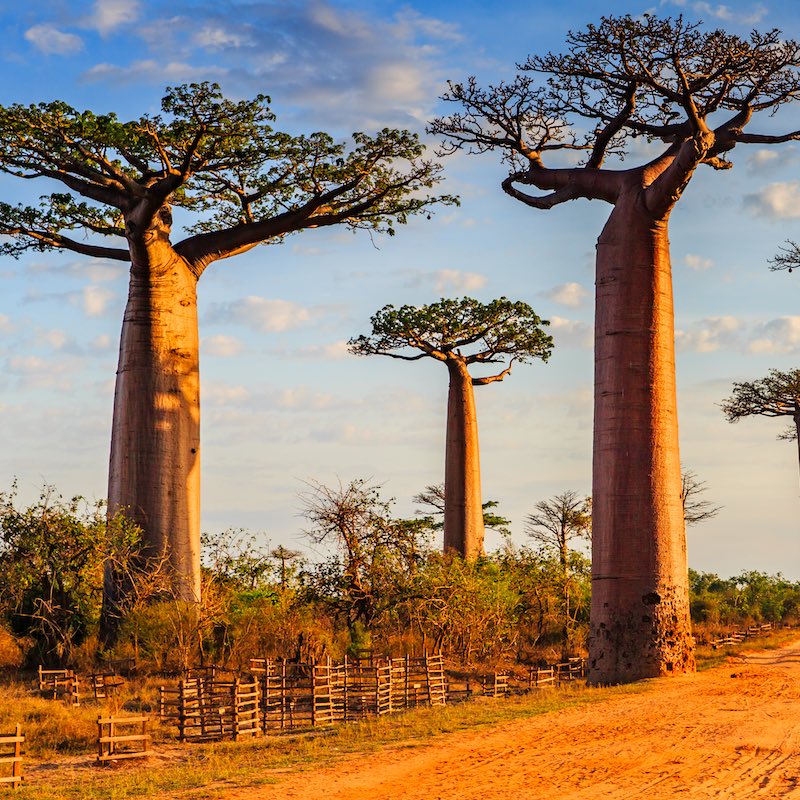
From the Northeast to the East coast of the red island, go on a 4×4 raid to discover the “Magic Triangle” of Madagascar. If you are into adventure and learning about species that you will never find anywhere else, Madagascar is your island break. Start your tour tasting seafood on the idyllic beaches of Nosy Be, then go fishing in the deep waters off the Emerald Sea, to finally finish your tour by discovering a plantation of vanilla from Madagascar, cocoa, and tropical fruits in the region of SAVA. You will meet adventure and fine cuisine at every step of your trip! Let’s dive in.
Best Time to Visit
The best time to travel to Madagascar is between July and November. Travel is still recommended between April and June (and December), however, you may encounter some rain. It is not recommended to go between January and March when their rainy season is at its highest. In general, the period between May to October (winter in the southern hemisphere) is the most pleasant time to travel to Madagascar, with cooler temperatures and little rain. However, in the last years, the traditional weather pattern is no longer reliable due to global climatic changes. You can have plenty of rain during the dry season and vice versa, so be ready for anything.
The tourist season begins in April after the cyclones. The rainy season is almost over but some areas are still hard to reach because of the terrible roads after the rainfalls. Until June it is “low season”, so prices are cheaper now than during the following months. This is the season of the rice crops on the highlands, a really impressive event to see. The months of July and August are the peak of the “high season” because it is the time when most tourists come here since they are on holiday. The height of the cyclone season is from January to March and affects the coastal regions.
13. Experience the Ancient City of Aksum – Ethiopia
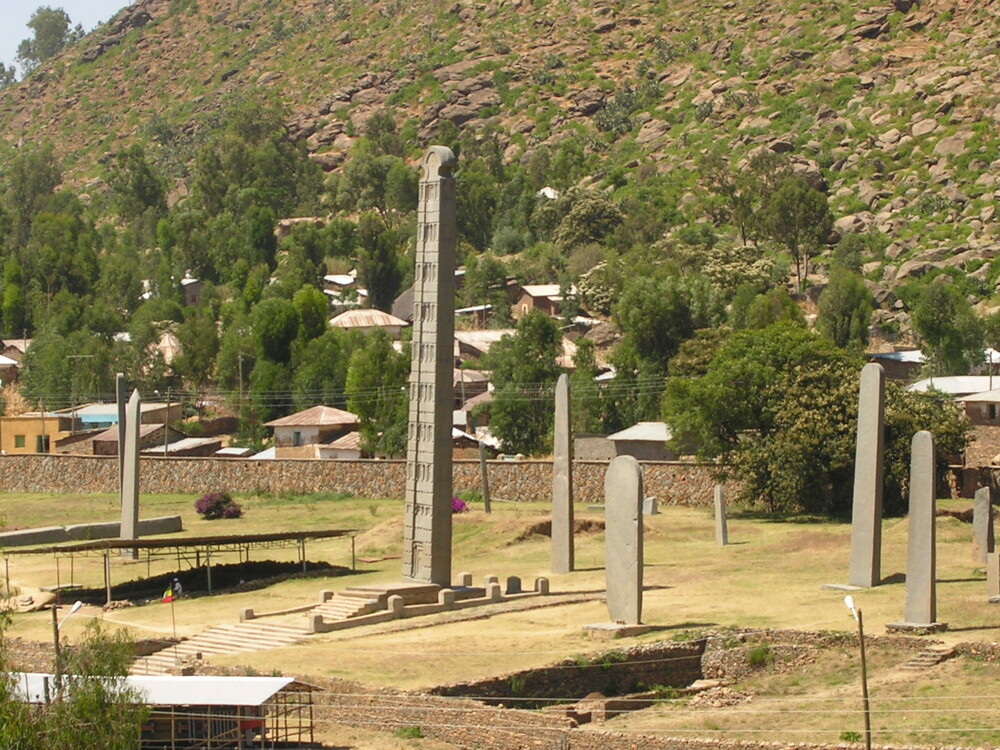
Aksum is located on a plateau in the far north of Ethiopia near the Eritrean border. It lies about 150 km south of Asmara and is a similar distance from the Red Sea coast. It was once the center of a great civilization, the Aksumite Kingdom, which stretched from southern Egypt to the Gulf of Aden (including territory in southern Arabia), south to the Omo River, and west to the Kushite Kingdom of Meroë. Its wealth was based on trade with places as far afield as ancient Greece, Egypt, and Asia, with Aksumite ships sailing as far as Sri Lanka. Although the city was established several centuries before Christ, its prosperity and influence were at their greatest between the 1st and 10th centuries AD, and it is during this period that most of the city’s remarkable monuments were built.
The dusty sprawling town of today belies its historical importance and interest to visitors. The most famous landmarks are the enormous obelisk-like stone stelae, up to 33m high, that stand – or lie broken where they fell – above a collection of unexcavated tombs. Elsewhere are the monumental 6th-century tombs of Kings Kaleb, Gebre Meskel, and Bazen, and the remains of a 6th to 7th-century Palace. Two other notable sights are the Churches of Saint Mary of Zion where – in common Ethiopian belief – the Ark of the Covenant is kept; and a 4th-century pillar, known as King Ezana’s Inscription, which is the Ethiopian equivalent of the Rosetta Stone, inscribed in Sabaean, Greek, and Ge’ez (the predecessor of Amharic).
14. A primate capital and birder’s paradise – Uganda
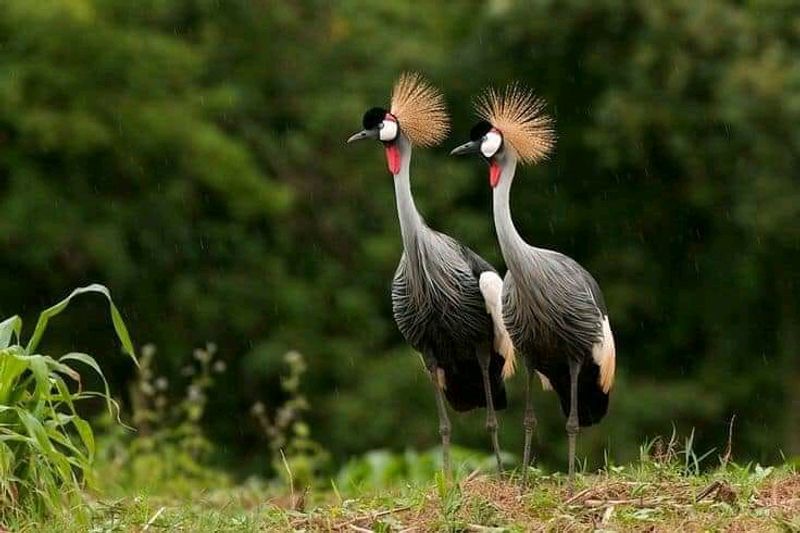
Landlocked in east-central Africa, Uganda is the “Pearl of Africa,” with its own rich wildlife, and is set to become more accessible, thanks to the resurrection last summer of the country’s national carrier, Uganda Airlines. Uganda is one of the world’s primate capitals, with 15 species (four of which are endangered) and the Bwindi Impenetrable Forest National Park, a renowned mountain gorilla sanctuary. The UNESCO World Heritage Site, in southwestern Uganda, is home to roughly half the world’s mountain gorillas. The park’s gorilla-trekking safaris limit contact to eight visitors per gorilla group per day, and proceeds from their trekking permits go toward conservation efforts and protecting the animals from poachers. The dense forest mountain park, which ranges in elevation between 3,810 feet and 8,880 feet, also features a scenic waterfall trail framed by ancient ferns and wild orchids, and is a birder’s paradise, with 350 species of forest birds.
15. Revisit the Ancient City of Kush – Sudan
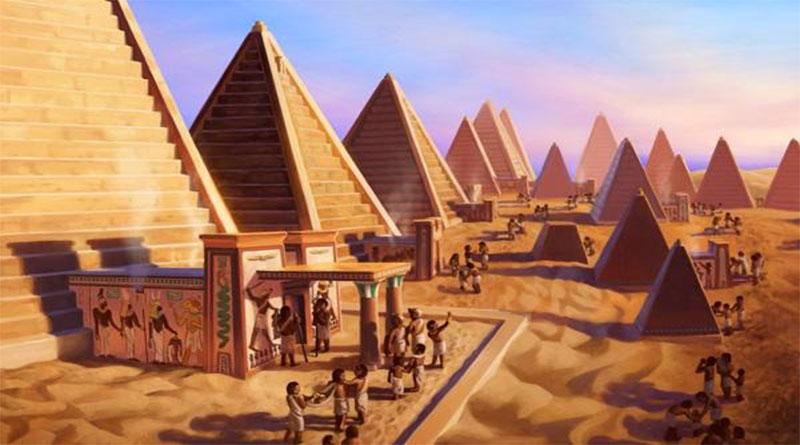
Kush is considered to be part of ancient Nubia and is primarily located in modern-day Sudan. Most of its greatest settlements were along the Nile River. Long overshadowed by its more prominent Egyptian neighbor, archaeological discoveries since the late 20th century have revealed Kush to be an advanced civilization in its own right. The Kushites had their own unique language and script; maintained a complex economy based on trade and industry; mastered archery; and developed a complex, urban society with uniquely high levels of female participation. The Kush civilization was known for its widespread trade routes, spreading ivory and other North African luxury goods throughout the Mediterranean. Ancient Kush had an abundant impact on Egypt, which can especially be seen during the twenty-fifth dynasty of Egypt when Kush’s leadership took control of Egypt. The Kushan Empire persisted until around 350 CE.
Continue learning about the next ten experiences on our membership page. Let us know if you enjoyed learning about these experiences and the ones that captured your attention. Better yet share any feedback you may have.


