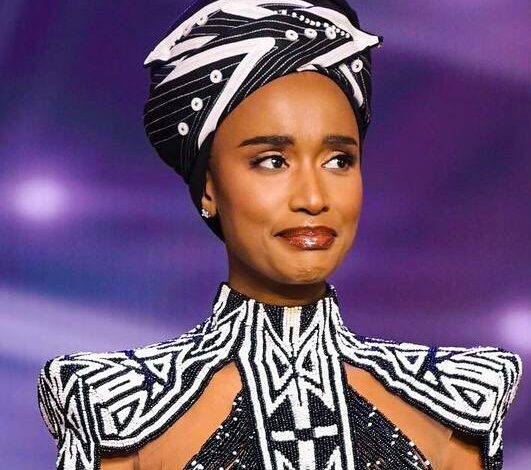
Our Summer in Africa series is back as we aim to highlight some of the most interesting and energizing experiences that make a great summer vacation in Africa. So as many of our customers are getting ready to rode the trolley and roam anyone, two, or more of the 54 countries in the continent, we will be exploring and uncovering some hidden gems and energizing experiences to embark on this summer. Africa offers a wealth of unforgettable summer experiences, each unique to its diverse landscapes and cultures. We create our summer reading series each year focusing on Africa and African writers — a fantastic way to explore the continent’s rich literary traditions, history, and culture. As you embark on your journeys we thought to remind you a few of the stories written by African authors. Perhaps they can give us a fresh new perspective and add exciting and interesting[…]
We are embarking on a captivating journey through time to explore the rich tapestry of traditional African tribes that have managed to preserve their customs amidst modernization. In this series we unravel the secrets behind intriguing rituals, mesmerizing dances, and age-old practices that have endured for generations. Discover the significance behind the colorful attire, intricate body art, and enchanting music that form an integral part of these ancient ceremonies. Through stunning visuals and expert insights, we shed light on the profound connection these tribes have with nature, ancestors, and spirituality. You’ll be amazed by the resilience and cultural pride that pervades every ritual, reinforcing the importance of preserving our diverse heritage. Let’s dive deep into the fascinating world of ancient African rituals with the trance dance of the San people.  The trance dance, which is still practiced by San communities in the Kalahari region, is an indigenous ritual by[…]
Beads are among the most intriguing and important symbols in African culture, past and present. If you are born in Africa, it is very likely you wore beads as a child no matter which country. It is a fact that Africans bestow great significance to their cultural artifacts, one of them being the beads. The materials used in making beads/beadwork are of the largest variety, from bone to glass. The colors and sizes, the significance of the materials chosen, the placement of beads (on the body, clothing, or articles) among other uses. The color, size, shape, and region on the body that the beads are worn meant many different things. Large and colorful beads symbolized wealth and social status in many African societies. In Egypt, nobles were known for adorning even their pets with beads, while Nigerian kings also wore beads to show their royalty. Among the Zulu ethnic[…]
Among ethnic groups in Africa proverbs are seen as wisdom handed down from generations and even in their most subtle form there is wisdom immensely valuable to learn and guide us. What do our ancestral scholars, whom we consider the wisest and most spiritually advanced, have to say to us today? One of those vehicles could be in proverbs. We collected some great proverbs through friends, and colleagues from across the continent often addressing universal themes human experiences, and various aspects of life. The themes include family, wisdom, morality, ethics, social living, knowledge, and cleverness. For example, in the Mandinka tribe, Proverbs highlight such aspects of life and culture as respect for elders; understanding one’s abilities and limitations; personal flaws; respect for the natural world; fear of dangerous animals; maintaining harmonious interpersonal relations; and bodily and spiritual cleanliness. The Yorubas of Nigeria cleverly emphasize the worth of proverbs with a[…]
Mythology is erudite for ebullient discussions, sparks critical thinking, stirs the imagination, and imbues us. Great mythologies” because of their rich characters, engaging narratives, enduring motifs, and timeless themes all seem to give us clues to the experience of life. “Myths are clues to the spiritual potentialities of the human life,” explains scholar Joseph Campbell on the celebrated PBS series Joseph Campbell on The Power of Myth with Bill Moyers. Campbell define myth as rather than being examples of the search for life’s meaning, that myths are the ongoing search for “the experience of life.” According to Campbell, what myths—all myths—tell us is that the meaning of life is the experience of life: “Eternity isn’t some later time, eternity isn’t a long time. Eternity has nothing to do with time! It is that dimension of here and now which thinking, and time cuts out … This is it. If[…]
We are delving into African mythology and understanding how myths have shaped African society. African mythology is a captivating and complex subject, with a rich history and a wealth of traditional stories and legends. Mythology is an erudite for ebullient discussions, sparks critical thinking, stirs the imagination, and imbues us. “Myths are clues to the spiritual potentialities of the human life,” explains scholar Joseph Campbell near the beginning of the celebrated PBS series Joseph Campbell on The Power of Myth with Bill Moyers. His definition of myth, rather than being that myths are examples of the search for life’s meaning, is that myths are the ongoing search for “the experience of life.” According to Campbell, what myths—all myths—tell us is that the meaning of life is the experience of life: “Eternity isn’t some later time, eternity isn’t a long time. Eternity has nothing to do with time! It is that dimension[…]
The Luba people, also called the Baluba people, are an ethno-linguistic group in the Democratic Republic of the Congo. The Luba people have three primary sub-groups: the Luba-Shankaji (located primarily in the Katanga province), the Luba-Bambo (located primarily in the Kasai province), and the Luba-Hemba (located primarily in the Katanga province and Kivu region). The Luba people are one of the Bantu peoples of Central Africa and the largest ethnic group in the Democratic Republic of the Congo. The Kingdom of the Luba arose in the Upemba Depression (a large marshy area comprising some fifty lakes) in what is now the southern Democratic Republic of Congo. The Luba Kingdom of the Democratic Republic of Congo was a very powerful and influential presence from the sixteenth to the early twentieth centuries. Their art highlights the roles that objects played in granting the holders the authority of kingship and royal power.[…]
The Dinka are one of the largest ethnic groups living in South Sudan and they are also known by the name Jieng. In African languages, linguists classify Dinka as a major language in the Nilotic category. They are part of a group of cultures known as the Nilotic peoples. The name Dinka – applied to both the language and its speakers – means “people.” Central to their society are cattle, which form the basis of livelihood and the economy of the Dinka. Like the Nuer and the Maasai, the Dinka are largely pastoral. They migrate regularly in response to the seasons and their agro-pastoral needs, moving herds of cattle to riverine pastures during the dry season, December to April, and back to permanent settlements in savanna forest during the rains. You can often determine what holds the most importance to a culture by the number of words that they[…]
A highlight for many safari travelers in East Africa is visiting and meeting with the Maasai people. The Maasai are a semi-nomadic, pastoral indigenous tribe whose ancestral territory stretches across southern Kenya and northern Tanzania, and they live by herding cattle and goats. Kenya recognizes over fifty tribes of native people. The Maasai were the dominating tribe at beginning of 20th century. In addition, the Maasai are one of the oldest communities in the world and viewed as Africa’s last great warrior tribe that has thrived in the great rift valley region of East Africa for over 2000 years. They are revered for their cultural traditions, lifestyle and lore and how well preserved tradition in the face of modernity. Since the Maasai live in proximity with the wildlife, it is as though the two co-exist as many Massai communities abut within the bounds of popular game preserves—including Maasai Mara,[…]
In this series we are embarking on a pioneering  corpus aim to highlight the rich history of some of the varied African tribes or people groups, their impact on African and world history, legacies and stories that matter. Studies have shown that the African continent contains the highest genetic diversity of any place in the world and population genetics theory predicts that the highest level of diversity exists at the source of the population’s origin. For humans, that is Africa — with respect to Africa being the cradle of humanity — the birth place of humankind. As the second largest continent, Africa is home to more countries than any other continent in the world and more tribes or people group than any other continent not to mention the highest variation in language with more than 2,000 distinct languages, Africa has a third of the world’s languages. The Yoruba are[…]

Your journey to
Africa begins here!

Subscribe to our newsletter to receive exclusive travel tips, postcards, inspiring stories and stay up to date with our latest specials on flights & travel deals. Never miss a beat!

P.S. Before you go check out our most read and popular
newsletter!

Your journey to
Africa begins here!

Thank you, click the button to download your pdf.

African Homecoming

This page is only available for participants. Please login to continue.

Call Now Button