
Arts and aesthetics reflect a people’s traditions, values, practices, pervasive realities, and external relationships. In the traditional African setup, art is intricately bound up with spirituality and culture. Thus Somjee (1992, 49) observes that “… art objects are not mediators of aesthetics but of ritual processes and institutional law that define and maintain relationships of the sexes, age groups, clans, and with neighboring ethnic groups.” The boundary between art, social practice, and spiritual or religious performance is subtle, but real (see Jahn 1968, 57-58). To illustrate this fact, one only has to witness the performance of the following Ifa divination verse:
The day Epe was created
Was the day Ase became law
Likewise, Ohun was born
The day Epe was invoked
Ase is proclaimed
Epe is called
But they both still need Ohun (Abiodun 1994, 73).
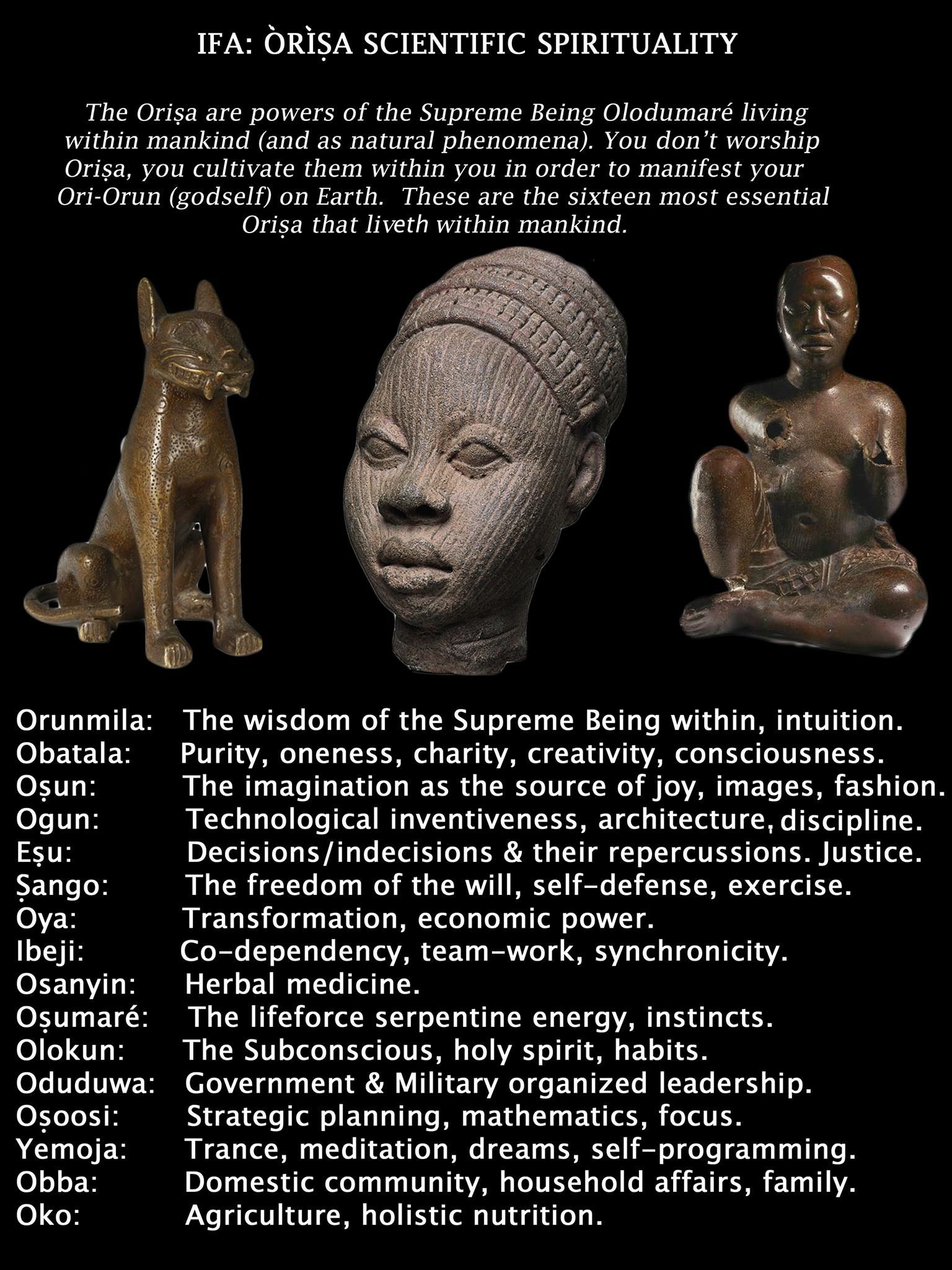
This verse cannot be properly comprehended without acknowledging the Yoruba religious beliefs and metaphysics. What do Epe, Ase, and Ohun mean? Are they simply names of things or places? Abiodun (1994, 73) enlightens us when he asserts that without Ohun (“voice”, “the verbalization or performance of the word”), neither Epe (“curse”, that is, “malevolent use of ase [life-force]”) nor Ase can act to fulfill its mission. Throughout his account, Abiodun affirms the intricate relationship between visual arts, music, dance, culture, and religion. In this affirmation, the historicity of the verse challenges us to seek a deeper understanding of the context of artworks. Abiodun’s account of the metaphysical, cultural, and religious aspects of Yoruba thought is of heuristic value in understanding the assertions of Belton (2014) concerning the Ibeji twin statues (Yoruba), Sowo Wui Helmet (Mende of Leone) and Aron Etoma (Temne of Sierra Leone).
In her keynote speech at the Humboldt Forum in Berlin on the occasion of the opening of the Ethnologisches Museum and the Museum für Asiatische Kunst, September 22, 2021; “IKENGA: African Sacred Object, Repository of SpiritualMeaning,” Chimamanda Ngozi Adichie reminded the audience the spiritual significance of African Art. “I was researching my second novel, Half of a Yellow Sun, which is set during the Nigerian Biafran war that started in 1967, a woman told me a story about her elderly father. It was early in the war and they were in the Biafran hometown, feeling relatively safe because the war seemed far away. Then suddenly they heard the loud terrifying sounds of bombing very close to them, and they knew that they had only minutes to leave their home and run into the interior for safety before the Nigerian soldiers arrived. The elderly father was a wealthy man, but the only thing he rushed to take with him was his Ikenga, a piece of wood, beautifully carved piece of wood, but it wasn’t just a piece of wood, it was also the repository of spiritual meaning. The Ikenga represented his Chi, his personal spirit as well as his ancestors, his guardian angels.
I was struck by this story. This man, facing the possibility of never seeing his home again, chose the thing that mattered most to him. Of course, he cared about his material possessions, but he believed that those things could eventually be replaced, while his Ikenga was irreplaceable. There are Ikengas in various museums all over the world today and it is easy to forget as we stare and admire them behind cold and clinical glass barriers that these are objects that are religious, spiritual, and sacred.
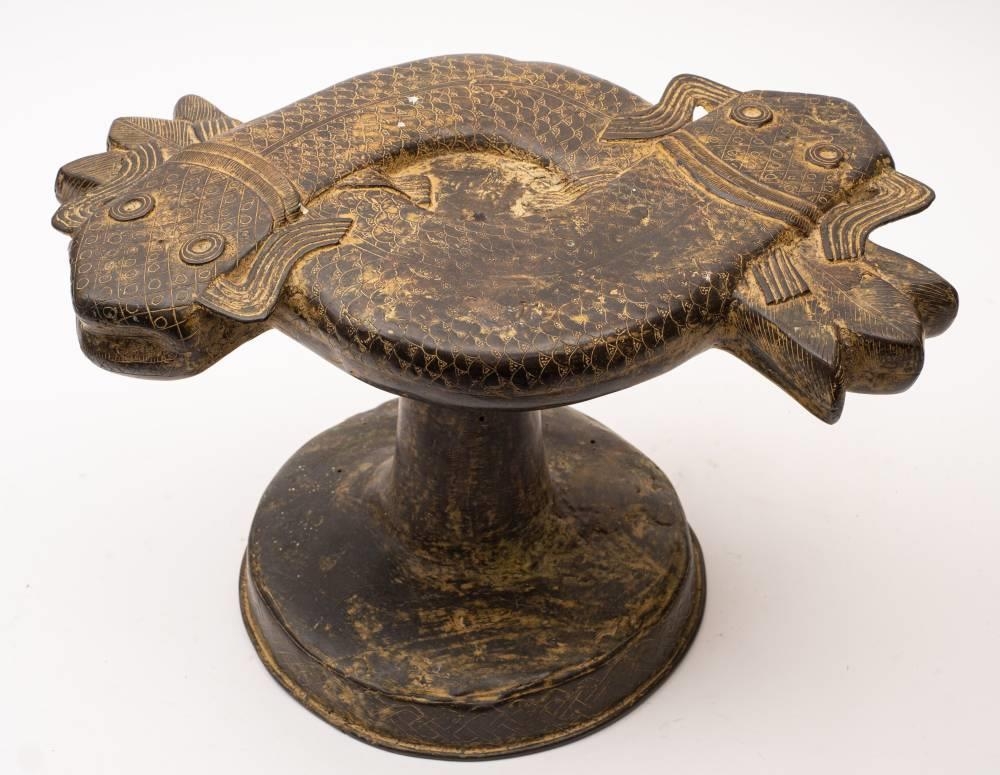
Art lives in history and history lives in art. Much of what we call African art is also documents that tell stories. Some are literal in the storytelling like the beautifully ornate Benin Stool that was sent to the Oba of Benin by his people when he was exiled by the British and which he looked at and immediately could deduce from the carvings, the State of his British plundered land. Other sculptures and carvings are more metaphorical, they speak to the dignity of the people, their worldview, and their aspirations.
It is usually accepted that two major civilizations developed in African antiquity: one around the Nile River in the northeast and the other, somewhat younger, around the Niger River in the west. Ancient Egypt and Nubia are prominent in history textbooks. West African civilization has not become as prominent. Ancient Egypt formed a remarkably durable state that strongly influenced West Asian and European cultures. It attracted Western scholars and collectors for many centuries, beginning in the classical Greco-Roman period. Roman sculptors made numerous replicas of Egyptian statues and the urge to imitate this original art continues to our time.
The civilization of western Africa evolved via numerous local empires and kingdoms competing and replacing each other throughout history. Greco-Roman scholars had rather foggy ideas of its geography and culture. Europeans encountered the Western Africancivilization directly late and quite slowly – initially via the Portuguese explorers and traders in the 15th century. It is ironic and symptomatic that the most publicized glimpse of Western Africancivilization was via the destruction and looting of Oba’s palace in the city of Benin by the British colonial expedition in February 1897. Among other goods, the British plundered over 900 bronze sculptures of exquisite aesthetic quality and technical mastery.

In “Hopes and Impediments,” a selection of essays by the great Chinua Achebe, in a chapter that only Achebe could respond with eloquence and class to Joseph Conrad’s Heart of Darkness. Achebe recounts an event that will mark the beginning of cubism and the infusion of new life into European art that had run completely out of strength. “For as it happened, soon after Conrad had written his book an event of far greater consequence was taking place in the art world of Europe. This is how Frank Willett, a British art historian, describes it:”
Gauguin had gone to Tahiti, the most extravagant individual act of turning to a non-European culture in the decades immediately before and after 1900, when European artists were avid for new artistic experiences, but it was only about 1904–5 that African art began to make its distinctive impact. One piece is still identifiable; it is a mask that had been given to Maurice Vlaminck in 1905. He records that Derain was “speechless” and “stunned” when he saw it, bought it from Vlaminck, and in turn showed it to Picasso and Matisse, who were also greatly affected by it. Ambroise Vollard then borrowed it and had it cast in bronze … The revolution of twentieth-century artwas underway!
A historically important photograph is hitherto unpublished. After having painted outdoors on a hot, bright day, Vlaminck stopped at a bistro in Argenteuil for some refreshment. As he stood drinking, he noticed on a shelf bar three African objects. Two of them, painted red, yellow, ochre, and white, were Yoruba pieces from Dahomey, and a third, unpainted and quite dark, was from the Ivory Coast. So struck was he by the force of these objects that he persuaded the owner to let him have them in exchange for buying the house a round of drinks.
Shortly afterward, Vlaminck showed these works to a friend of his father’s, who in turn gave him three more African carvings including a Fang mask. When Derain saw the mask hanging above Vlaminck’s bed he was deeply impressed and offered twenty francs for it. Derain then took the mask to his studio on the Rue Toulaque, and it was there that Picasso and Matisse saw it and were supposedly first incited to enthusiasm for tribal art. Vlaminck showed another Africansculpture to Derain, remarking that it was ‘almost as beautiful’ as the Venus de Milo. Derain then replied that it was ‘as beautiful’ as the Venus. The two men then showed the sculpture to Picasso who topped them both by declaring that it was ‘even more beautiful.’
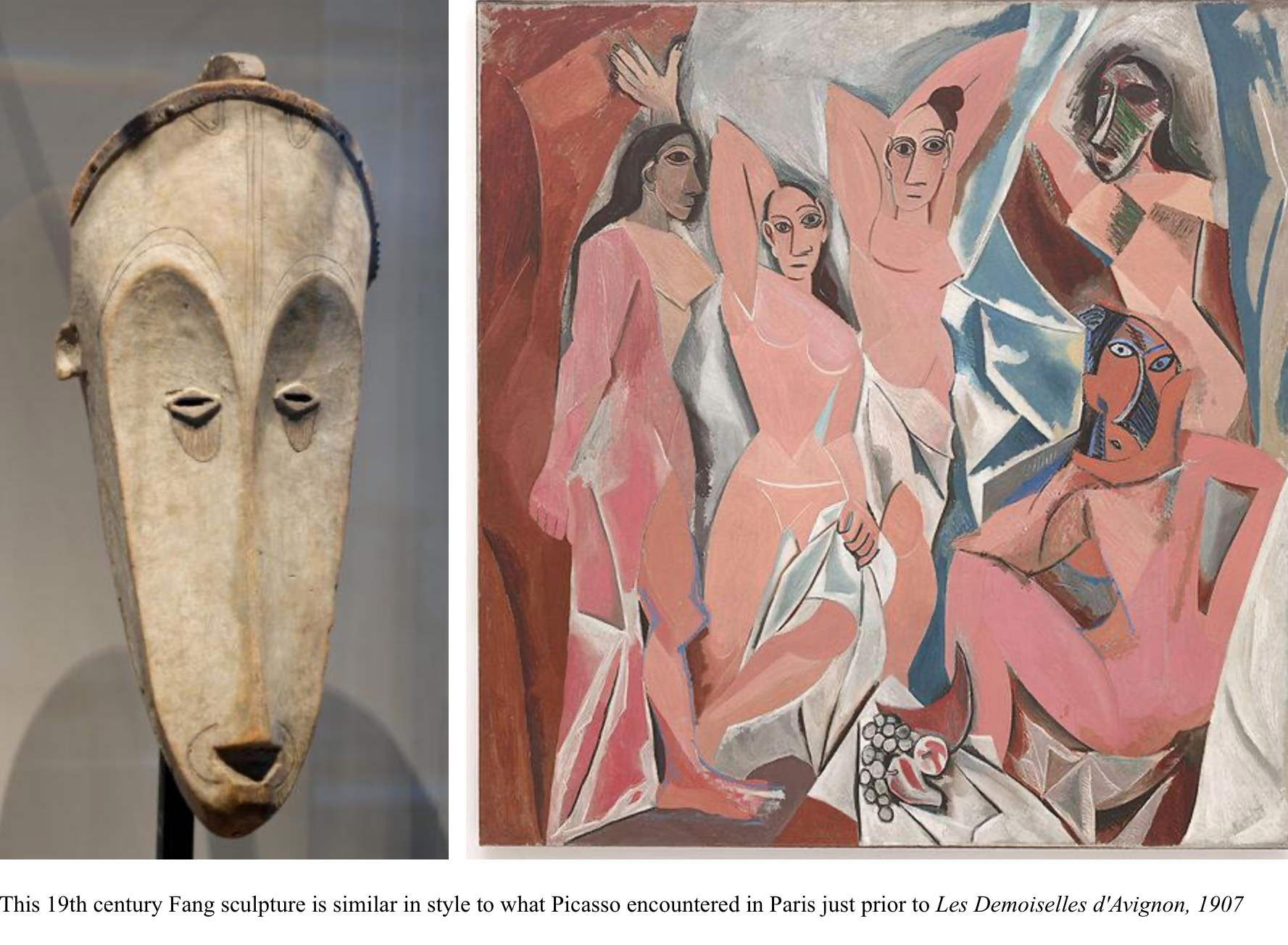
The mask in question was made by other savages living just north of Conrad’s River Congo. They have a name too: the Fang people, and are without a doubt among the world’s greatest masters of the sculptured form. The mask is an elongated type worn by members of the powerful religious and judiciary secret society known as the Ngil, which was widespread among the Northern Fang and others to the southeast of them (the Fang are a subgroup of the Pangwe people). Ngil members acted as police and judges, revealing sorcerers and handing down sentences to those who did not obey the law. (The usual punishment for sorcery was death.) Ngil masters were also known as peacekeepers, settling conflicts between clans and rival villages.
The masks, which were a fearsome sight – firelight increased the dramatic effect of the fiber ruff and raffia strips — played an important part in the imposition of social order. The French banned their use following a series of ritual murders in 1910. After the ban, much information about Ngil society disappeared, and there are very few well-documented examples of this kind of mask in existence. This Ngil mask from Gabon incorporates stylistic features typical of Fang figurative carving: a very broad forehead with a double arch over the eyes, a heart-shaped face, and a projecting mouth. The kaolin (pale clay) of the face conveys the color of the dead or of spirits.
“We cannot change the past but we can change our blindness to the past. And why by the way, is the term ethnological used for art from certain parts of the world and not for other parts of the world? In discussing some of this art that we term ethnological, I would argue that the language itself already suggests a hierarchy of value. When we talk about this art, we are told that they cannot be returned to Africa; for example, because Africans will not take good care of them. It is not merely condescending to say I cannot return what I stole from you, because you will not take good care of it; it is also lacking in basic logic, since when has the basis of ownership been taking good care of what is owned? This position is paternalistic arrogance of the most stunning sort. It does not matter whether Africans or Asians or Latin Americans can take care of the arts stolen from them;, what matters is that it is theirs,” argued Adichie.
The brilliant Nigerian artist Viktor Hickameno put it much better and in very Nigerian terms, he says, ‘if I come and steal your wrapper, and I say I won’t give you back your wrapper because you will not tie it properly around your waist or you will not wash it well and so the colors would fade or this or that, all are irrelevant. The wrapper is mine and I can do with it what I will. Give me back my wrapper because it is mine. The metaphorical wrapper for those of you who are befuddled by the wrapper, it’s a piece of cloth. It should be returned for the reason that Ahika men are illustrated which is respecting the property of others, but also because Europe has defined itself as a place of certain values, progress, liberty, fraternity, tolerance, individual rights, and most of all, the rule of law.
A nation that believes in the rule of law, cannot possibly be debating whether to return stolen goods, it just returns them. So, if the dignity of those from whom the art was stolen does not matter, then surely this idea should matter that Europe should be what it claims to be, and live up to the ideals with which you define yourself.


